That Marketing Buddy
All-in-One Marketing Software

22 Best All-in-One Marketing Software in 2026

All-in-one marketing platforms combine email marketing, CRM, landing pages, automation, and analytics into a single tool. Instead of juggling multiple subscriptions and integrations, you get everything you need to run marketing campaigns from one dashboard.

Last updated: January 19, 2026

This page may contain affiliate links. I only recommend software I trust.

Who Is This Guide For?

  • Small business owners tired of managing multiple marketing tools
  • Online course creators and coaches building their audience
  • E-commerce brands running multi-channel marketing campaigns
  • Marketing agencies managing client campaigns efficiently

Quick Verdict

Systeme.io offers the best value with its generous free plan and comprehensive features. HubSpot Marketing Hub is my top pick for growing businesses that need professional tools, while Kartra excels for course creators and membership sites.

My Top Picks

Top Pick
#1

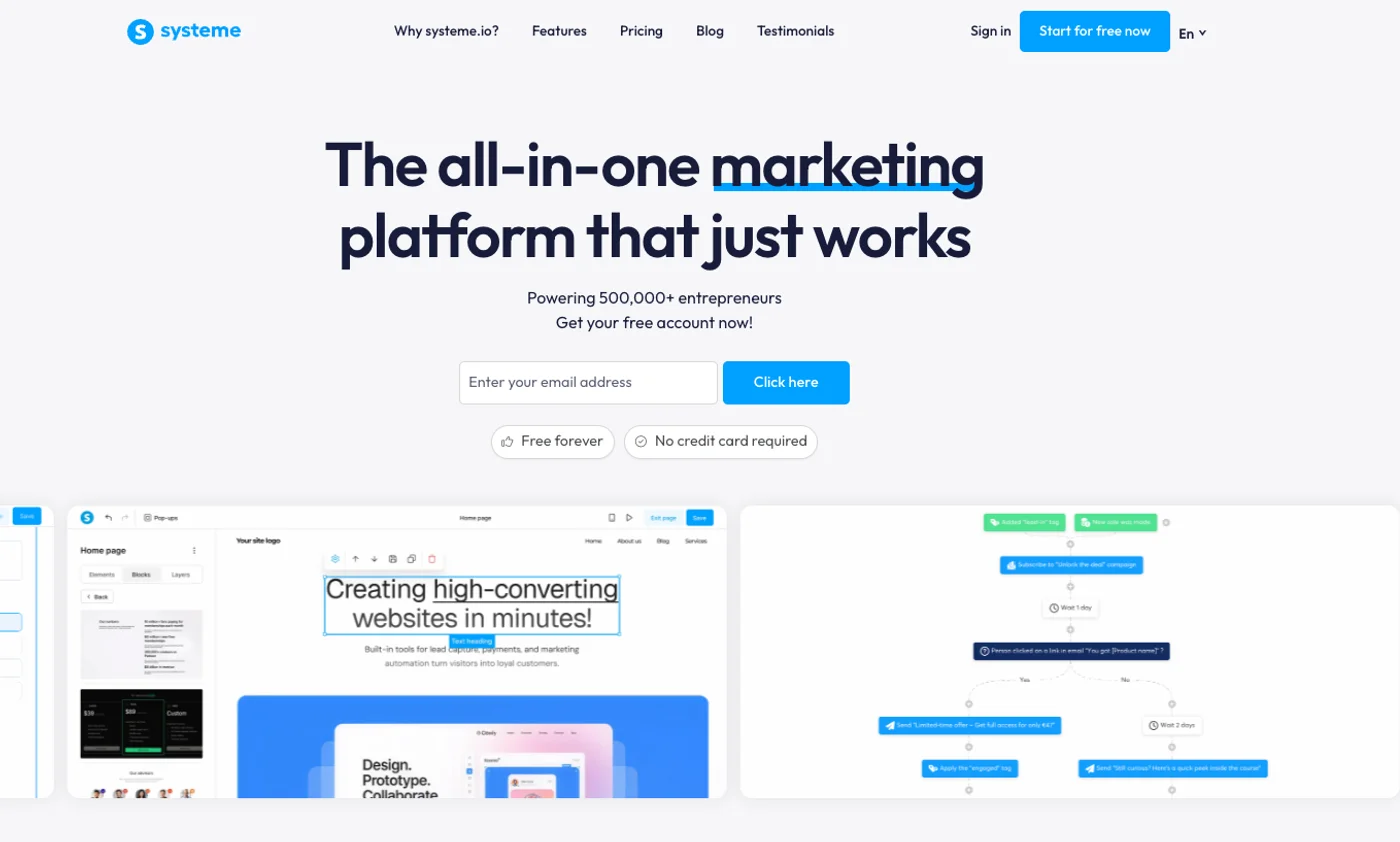
Systeme.io

Best for: Entrepreneurs just starting out who need basic marketing tools without monthly costs
★★★★★4.8/5

Complete marketing platform with sales funnels, email marketing, courses, and more at budget-friendly prices

Why I like it: Systeme.io's free forever plan includes email marketing, sales funnels, and course hosting for up to 2,000 contacts. The interface is clean and beginner-friendly, making it perfect for solopreneurs who want to test the waters before committing to paid tools.

Key Features

  • Free forever plan
  • Email marketing automation
  • Sales funnel builder
  • Course and membership sites

Pros

  • Generous free plan with real value
  • Simple interface for beginners
  • All core features included

Cons

  • Limited advanced automation
  • Fewer integrations than competitors
Systeme.io homepage screenshot
Best for Course Creators
#2

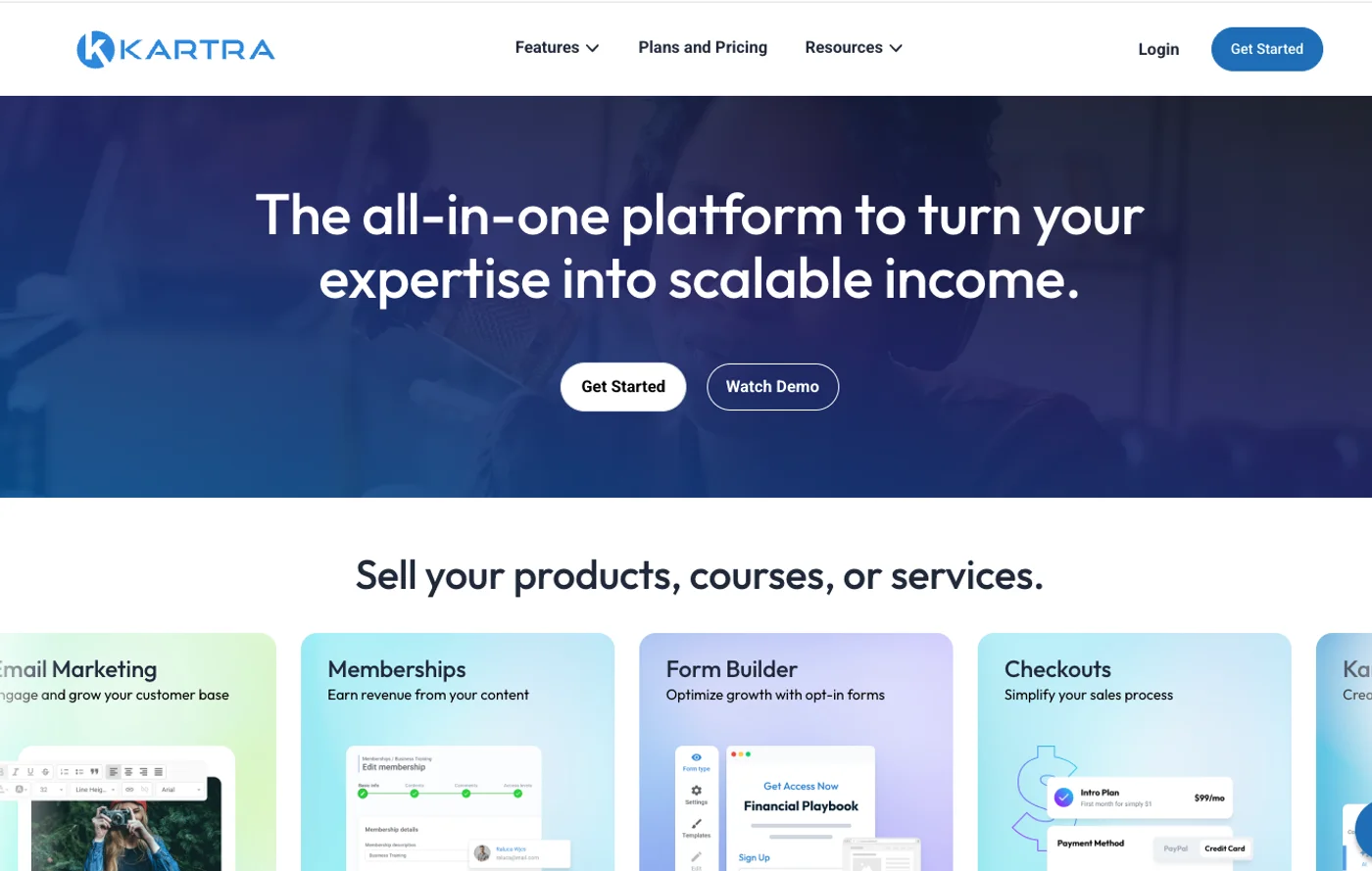
Kartra

Best for: Video marketers, course creators, and coaches building membership communities
★★★★4.2/5

True all-in-one marketing platform with advanced funnels, email automation, and membership hosting

Why I like it: Kartra was built specifically for online educators and coaches. It handles video hosting, membership site management, and automated course delivery better than general marketing platforms. The calendar booking and affiliate management tools are particularly strong.

Key Features

  • Video hosting and streaming
  • Membership site builder
  • Calendar booking system
  • Affiliate management

Pros

  • Designed specifically for course creators
  • Excellent video hosting capabilities
  • Built-in affiliate program tools

Cons

  • Higher learning curve
  • More expensive than basic alternatives
Kartra screenshot
Best for Beginners
#3

Mailchimp

Best for: Small businesses taking their first steps into email marketing and automation

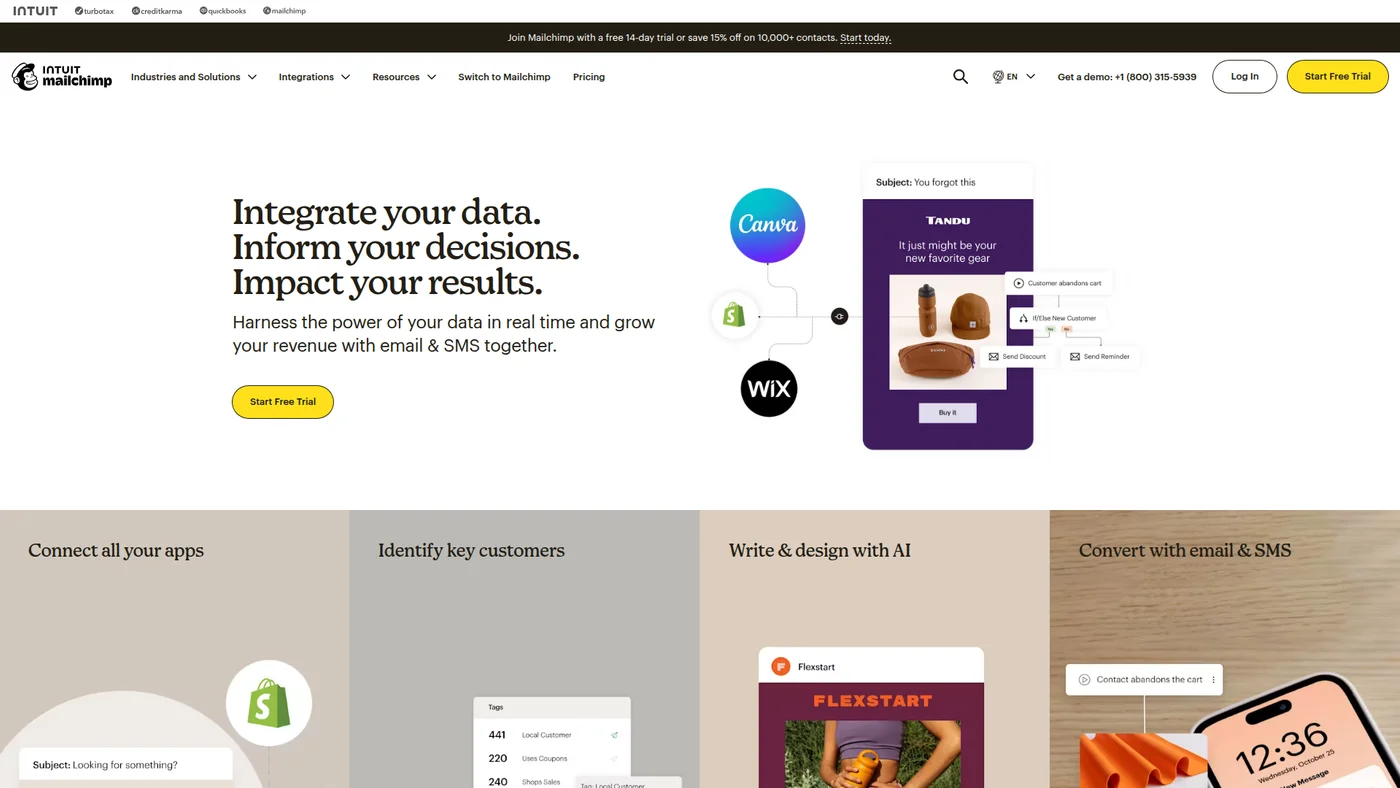
Email marketing platform evolved into full marketing automation tool with landing pages, CRM, and social media scheduling.

Why I like it: Mailchimp makes marketing automation accessible to complete beginners with its drag-and-drop email builder and pre-built templates. The free plan is solid for getting started, and the interface feels familiar to most users.

Key Features

  • Drag-and-drop email builder
  • Pre-built automation workflows
  • Audience segmentation
  • Basic landing pages

Pros

  • User-friendly for beginners
  • Strong template library
  • Reliable email deliverability

Cons

  • Limited automation on free plan
  • Pricing increases quickly with list growth
Mailchimp homepage screenshot
Review coming soonVisit Mailchimp
Best for Automation
#4

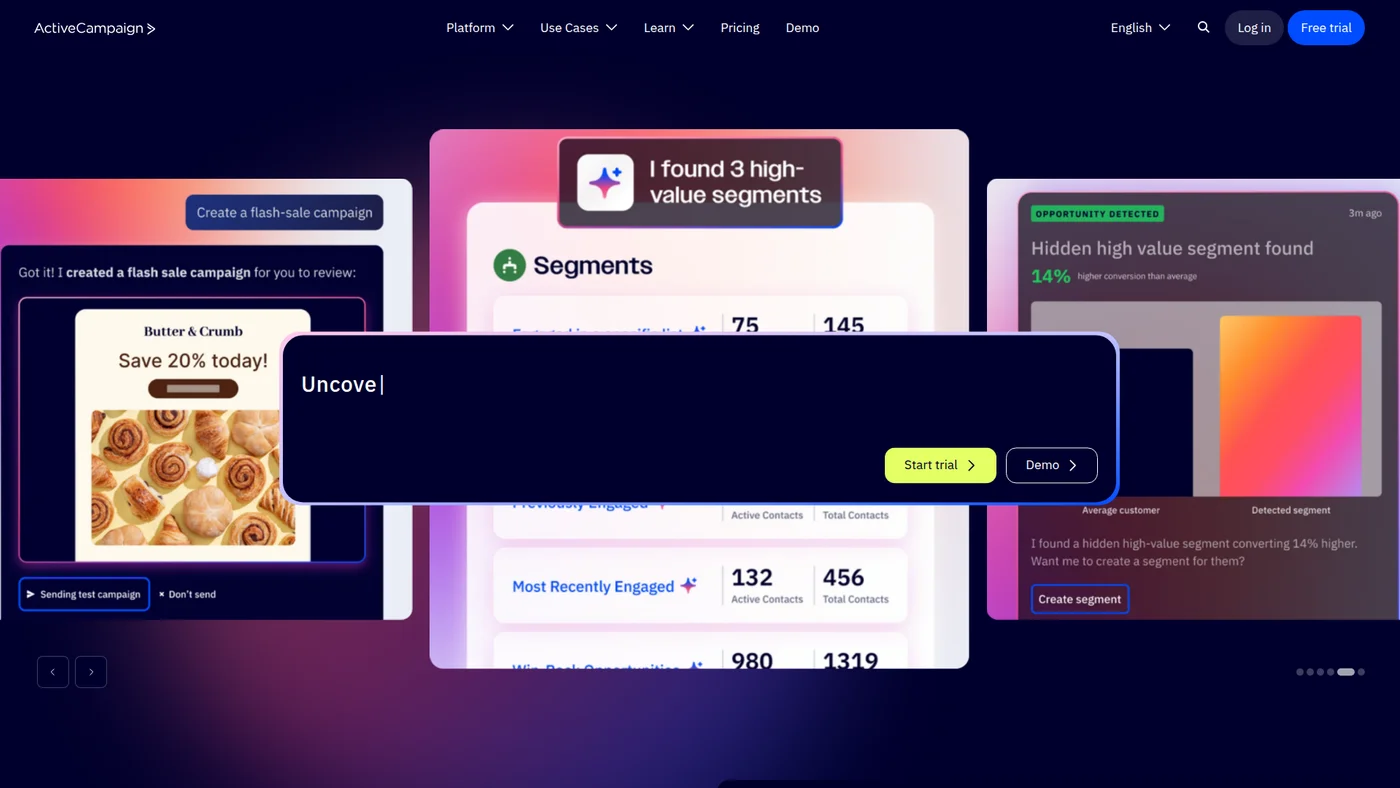
ActiveCampaign

Best for: Growing businesses that want sophisticated marketing automation without enterprise complexity

Marketing automation platform combining email marketing, CRM, and machine learning for customer experience automation.

Why I like it: ActiveCampaign strikes the perfect balance between power and usability. Their visual automation builder lets you create complex customer journeys, while machine learning helps optimize send times and content for each subscriber.

Key Features

  • Visual automation builder
  • Machine learning optimization
  • CRM integration
  • Dynamic content

Pros

  • Powerful automation without complexity
  • Excellent customer segmentation
  • Strong CRM integration

Cons

  • Can become expensive with large lists
  • Some features require higher tiers
ActiveCampaign homepage screenshot
Review coming soonVisit ActiveCampaign
Best for Small Business
#5

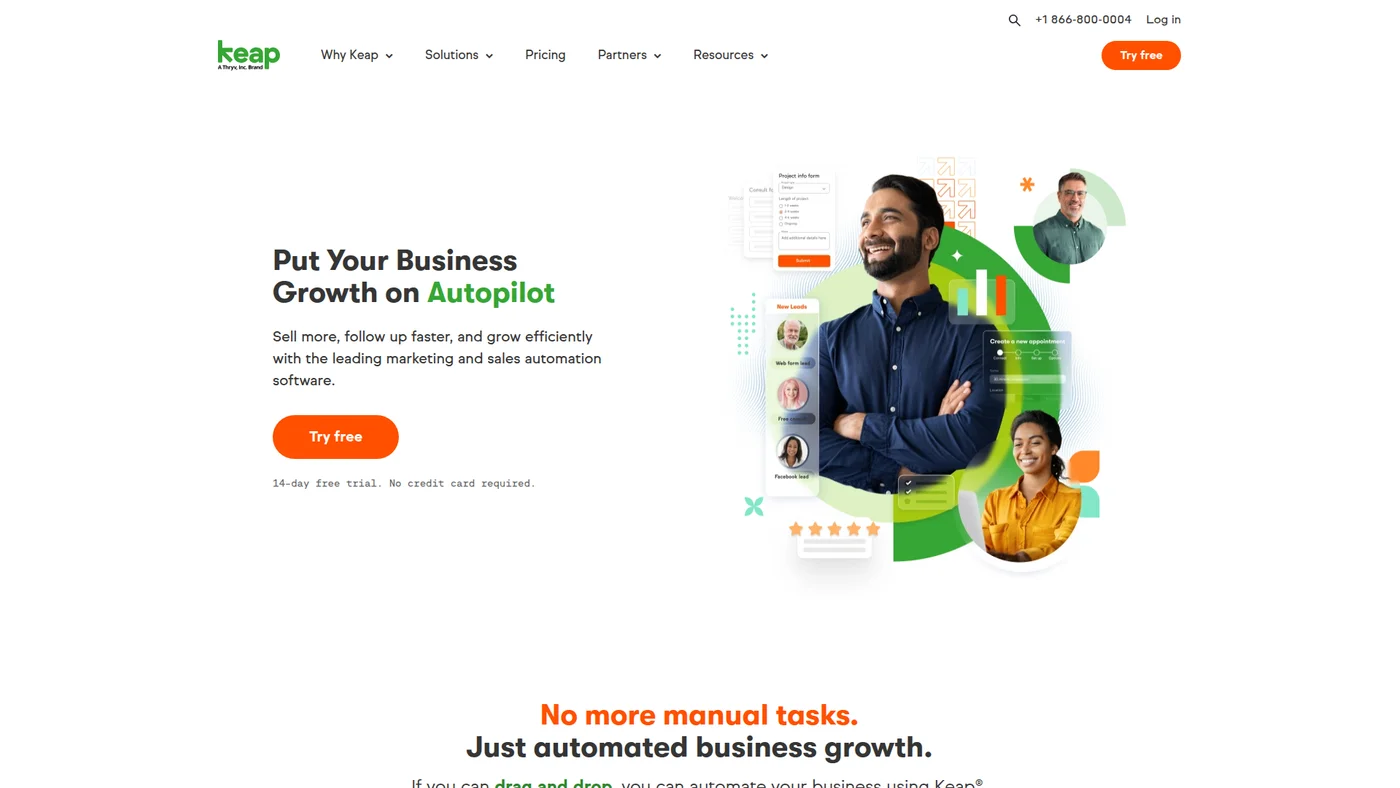
Keap

Best for: Service-based small businesses that need CRM and marketing automation in one tool

CRM and marketing automation platform designed for small businesses with sales pipeline management.

Why I like it: Keap was designed specifically for small business owners who wear multiple hats. It combines contact management, appointment scheduling, and follow-up automation in a way that makes sense for service businesses like consultants and contractors.

Key Features

  • Contact and lead management
  • Appointment scheduling
  • Payment processing
  • Follow-up automation

Pros

  • Built for small business workflows
  • Good customer support
  • Integrated payment processing

Cons

  • Interface feels dated
  • Limited customization options
Keap homepage screenshot
Review coming soonVisit Keap
Best Overall
#6

HubSpot Marketing Hub

Best for: Growing businesses that want professional marketing tools with room to scale

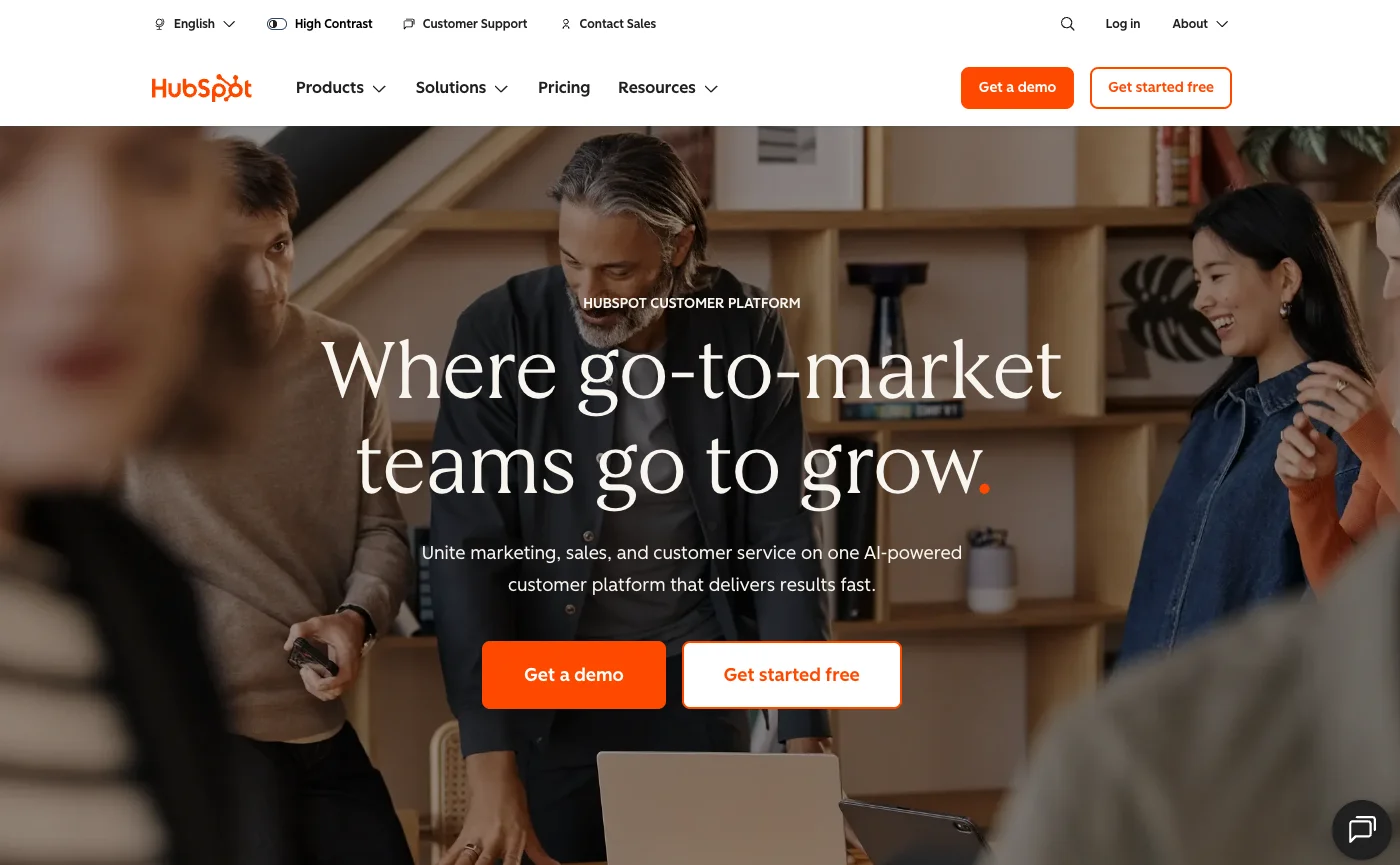
Comprehensive marketing automation platform with CRM, email marketing, landing pages, and analytics in one solution.

Why I like it: HubSpot Marketing Hub offers the best combination of features, usability, and scalability. The free CRM integrates seamlessly with marketing tools, and the platform grows with your business without forcing you to start over with a new system.

Key Features

  • Integrated CRM and marketing
  • Landing page builder
  • Social media scheduling
  • Comprehensive analytics

Pros

  • Excellent free tier
  • Seamless CRM integration
  • Great educational resources

Cons

  • Pricing increases significantly at scale
  • Some advanced features require higher tiers
HubSpot Marketing Hub screenshot
Best for Sales Funnels
#7

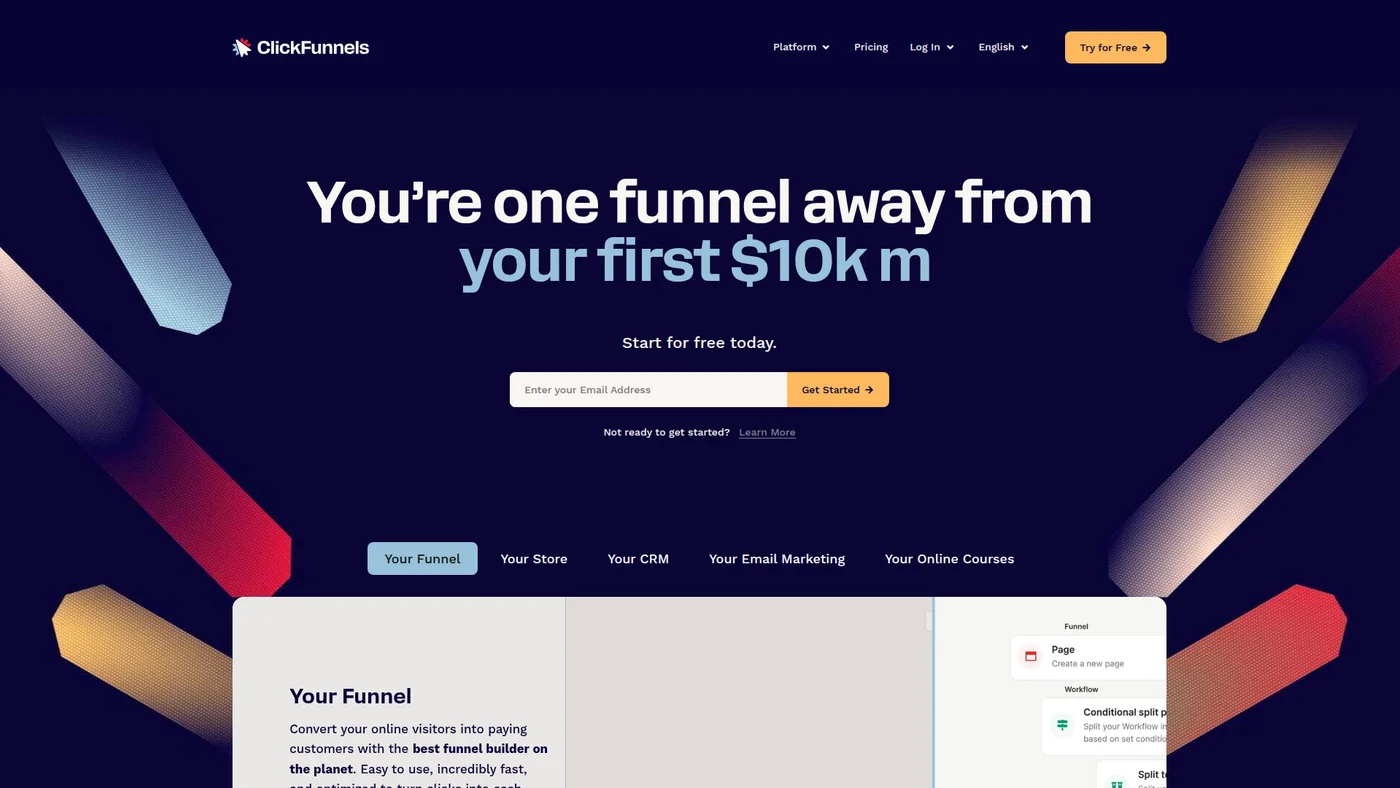
Clickfunnels

Best for: Online entrepreneurs building sales funnels and selling digital products
★★★★4.2/5

All-in-one marketing platform for building sales funnels, hosting courses, and managing customers

Why I like it: ClickFunnels pioneered the sales funnel builder category and still leads in ease of use. If your primary goal is building high-converting sales funnels rather than comprehensive marketing automation, ClickFunnels delivers exactly what you need.

Key Features

  • Drag-and-drop funnel builder
  • A/B testing tools
  • One-click upsells
  • Membership site functionality

Pros

  • Industry-leading funnel templates
  • Simple drag-and-drop interface
  • Strong conversion optimization tools

Cons

  • Limited email marketing features
  • Higher cost for full functionality
Clickfunnels homepage screenshot
Most Features
#8

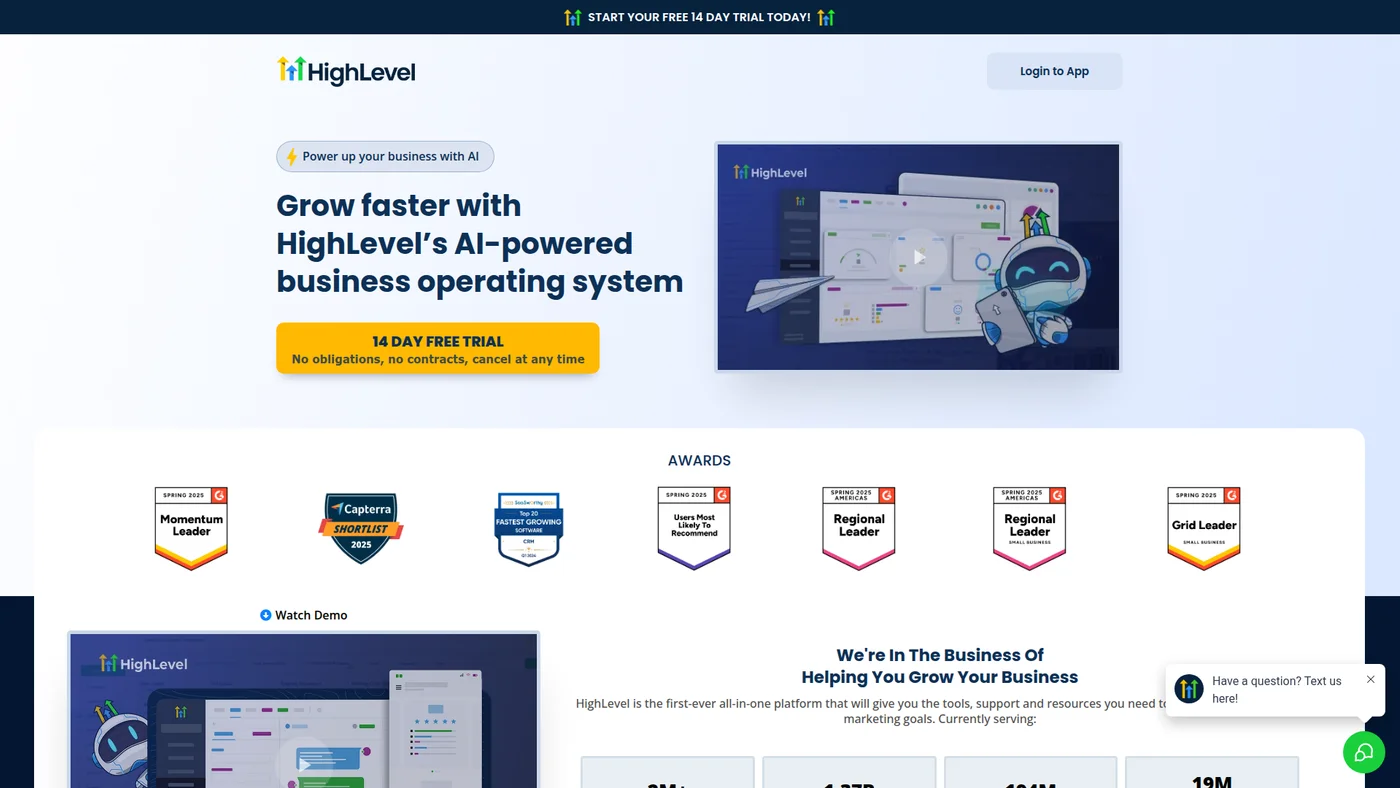
GoHighLevel

Best for: Marketing agencies and consultants managing multiple client accounts
★★★★☆3.8/5

All-in-one CRM and marketing platform designed for agencies. Replaces multiple tools but has a steep learning curve.

Why I like it: GoHighLevel packs an incredible number of features into one platform, including reputation management, appointment scheduling, and white-label options for agencies. It's like getting 10 different tools for the price of one comprehensive solution.

Key Features

  • White-label platform
  • Reputation management
  • Two-way SMS
  • Website and funnel builder

Pros

  • Massive feature set
  • Great for agencies
  • All-in-one solution

Cons

  • Steep learning curve
  • Interface can feel overwhelming
GoHighLevel homepage screenshot
Best Value
#9

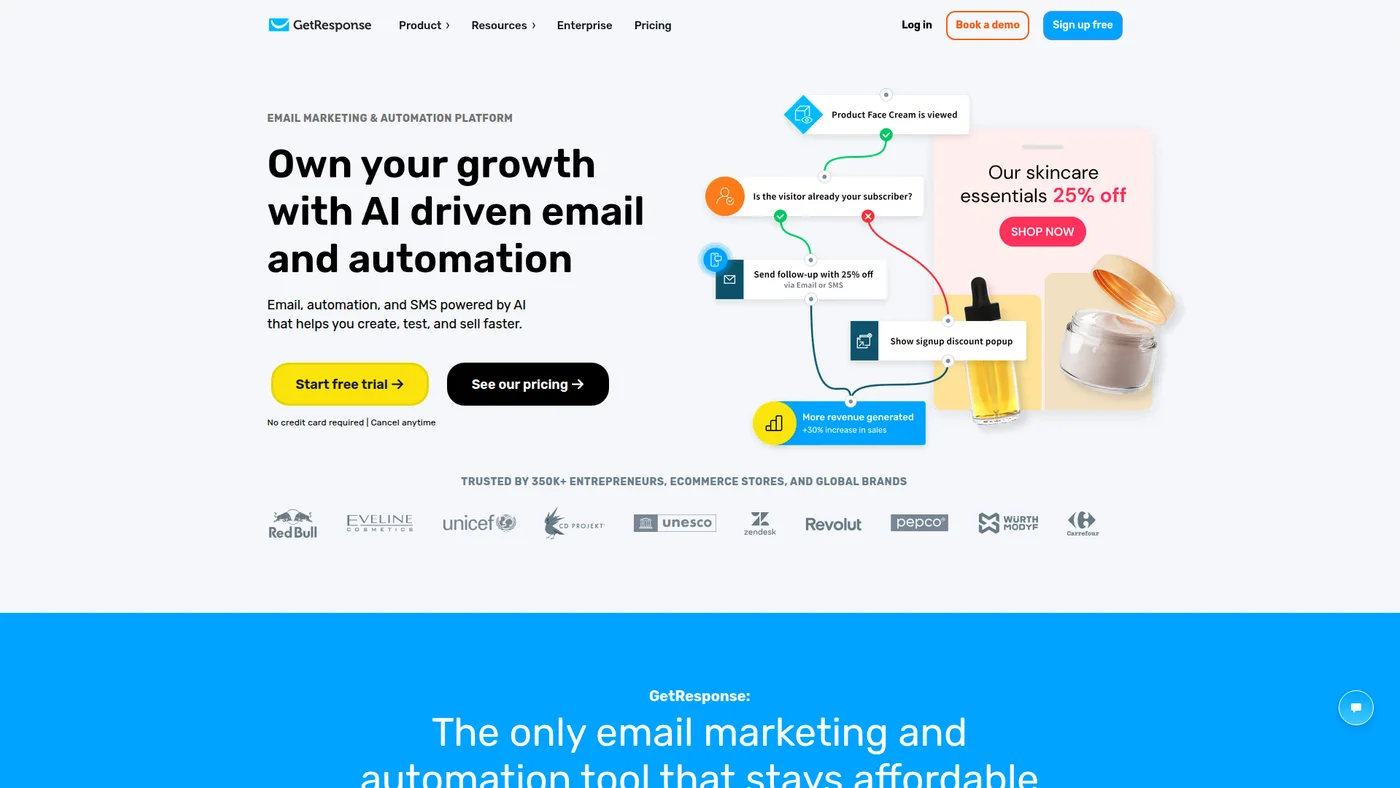
GetResponse

Best for: Small to medium businesses wanting comprehensive marketing tools at a reasonable price

All-in-one marketing platform with email marketing, landing pages, webinars, and e-commerce tools.

Why I like it: GetResponse offers webinar hosting, landing pages, and e-commerce tools at a price point that makes sense for growing businesses. The webinar integration alone saves you from needing a separate webinar platform subscription.

Key Features

  • Built-in webinar hosting
  • E-commerce tools
  • Marketing automation
  • Website builder

Pros

  • Great value for money
  • Webinar hosting included
  • Comprehensive feature set

Cons

  • Interface could be more modern
  • Learning curve for advanced features
GetResponse homepage screenshot
Review coming soonVisit GetResponse
Best for Creators
#10

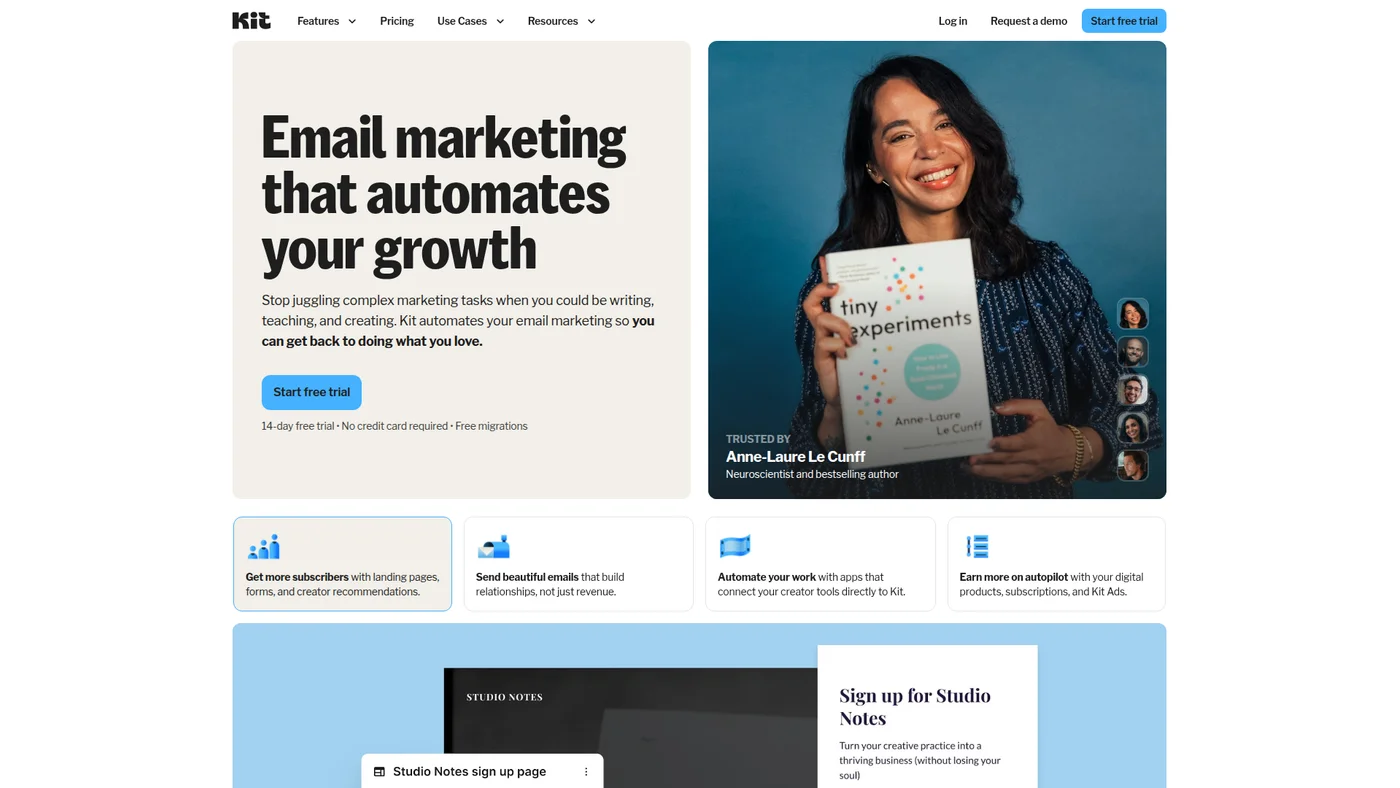
ConvertKit

Best for: Content creators, bloggers, and online educators building their audience

Email marketing platform built for creators with automation, landing pages, and digital product selling tools.

Why I like it: ConvertKit was designed by creators for creators. It makes complex automation simple with visual workflows and focuses on the features creators actually need rather than overwhelming you with enterprise tools you'll never use.

Key Features

  • Visual automation builder
  • Creator-focused templates
  • Digital product integration
  • Subscriber tagging system

Pros

  • Built specifically for creators
  • Intuitive automation workflows
  • Great customer support

Cons

  • Limited design customization
  • Fewer integrations than competitors
ConvertKit homepage screenshot
Review coming soonVisit ConvertKit
Best Omnichannel
#11

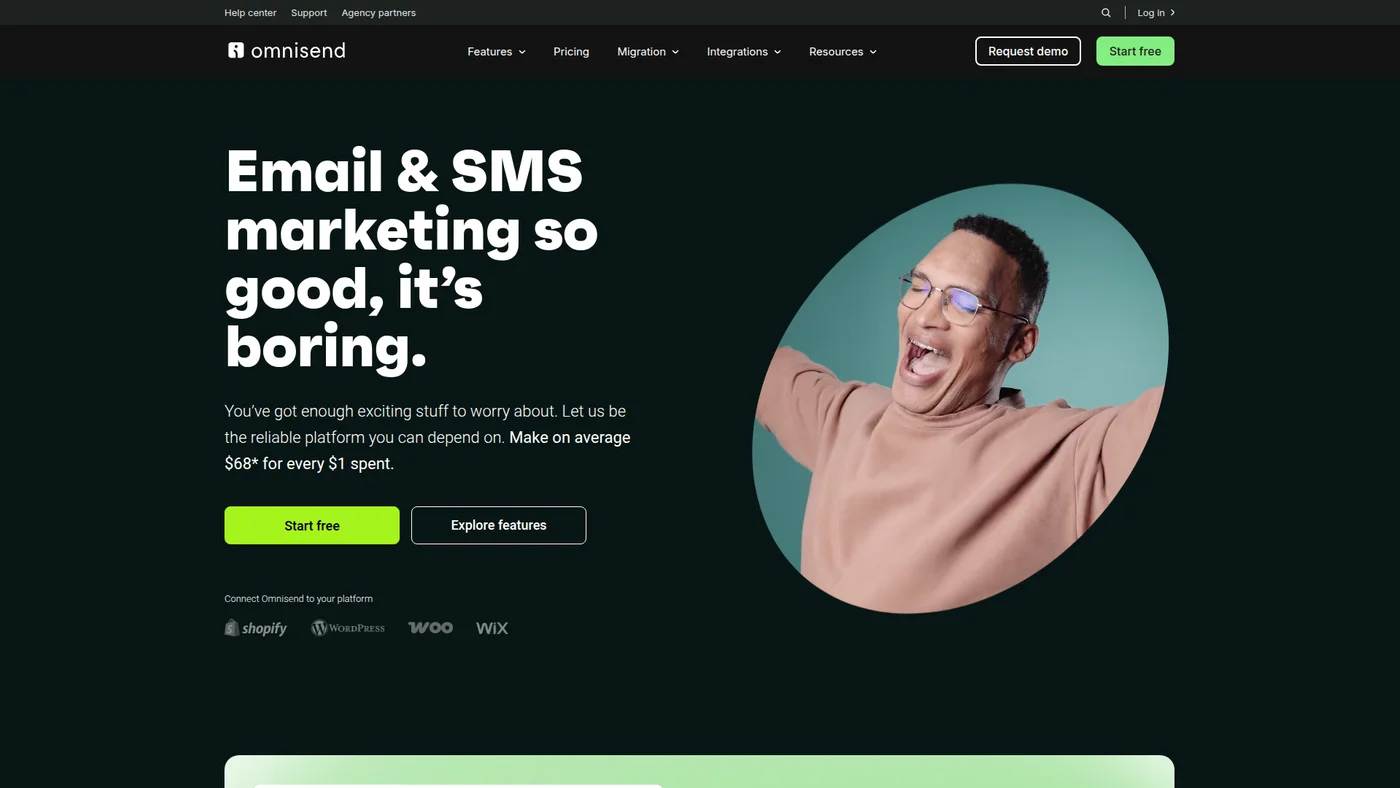
Omnisend

Best for: E-commerce brands running coordinated campaigns across email, SMS, and push notifications

E-commerce marketing automation platform with email, SMS, and push notification campaigns.

Why I like it: Omnisend excels at omnichannel marketing for e-commerce. It automatically syncs with your store data to create targeted campaigns based on purchase behavior, browsing history, and customer lifecycle stage across multiple channels.

Key Features

  • E-commerce platform integrations
  • SMS and email coordination
  • Push notifications
  • Product recommendation engine

Pros

  • True omnichannel approach
  • Strong e-commerce focus
  • Automated product recommendations

Cons

  • Primarily designed for e-commerce
  • Limited for service businesses
Omnisend homepage screenshot
Review coming soonVisit Omnisend
Best for Local Business
#12

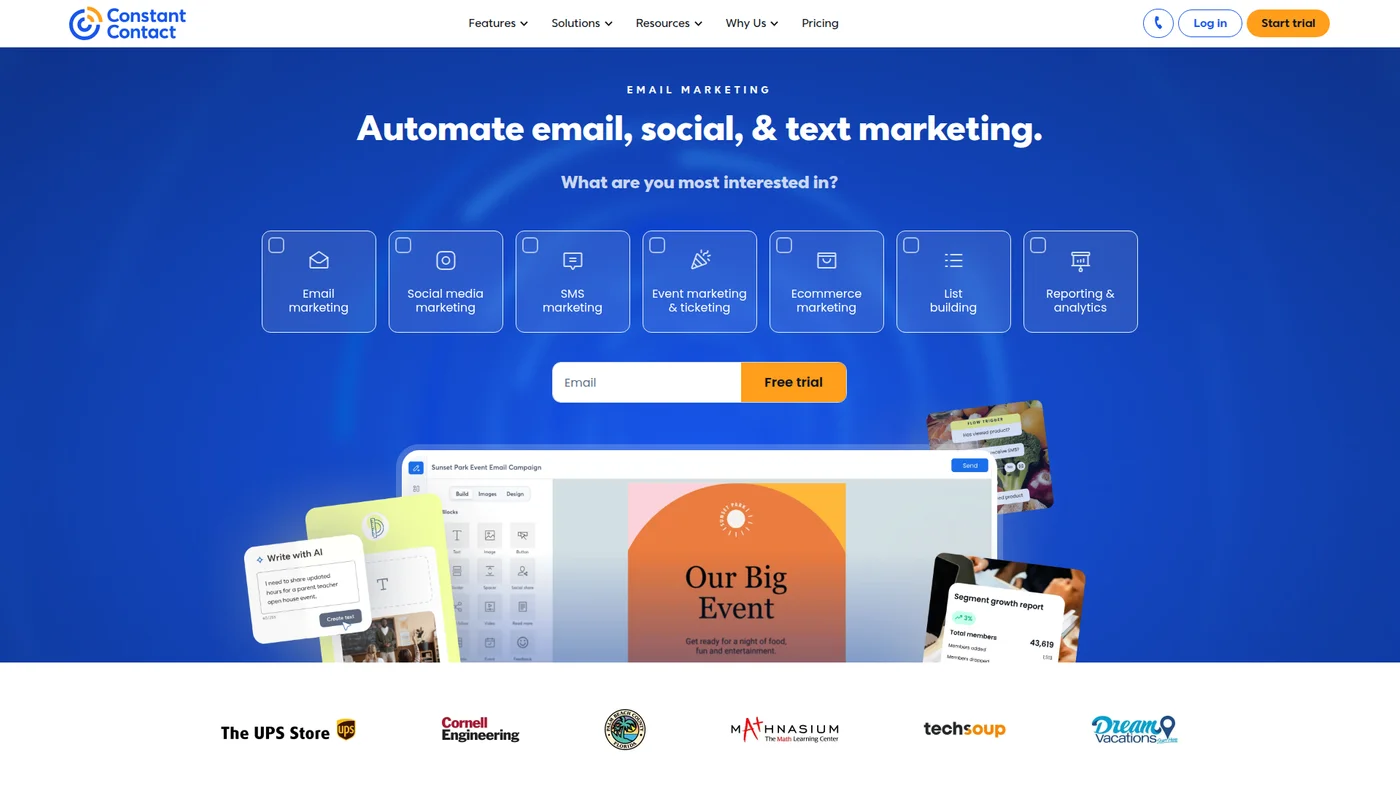
Constant Contact

Best for: Local service businesses and community organizations building customer relationships

Email marketing and digital marketing platform with social media tools and event management features.

Why I like it: Constant Contact offers event management tools and local marketing features that make sense for brick-and-mortar businesses. The customer support is particularly strong, with real humans who understand small business needs.

Key Features

  • Event management tools
  • Social media integration
  • Contact management
  • Email templates for local business

Pros

  • Excellent customer support
  • Local business focus
  • Event management included

Cons

  • Limited automation capabilities
  • Interface feels dated
Constant Contact homepage screenshot
Review coming soonVisit Constant Contact
Best Design Tools
#13

Campaign Monitor

Best for: Design-conscious businesses that want beautiful emails without hiring a designer

Email marketing platform with drag-and-drop builder, automation, and analytics for professional campaigns.

Why I like it: Campaign Monitor's email designer creates stunning emails that look great on any device. If visual appeal is important to your brand, Campaign Monitor's templates and design tools are hard to beat.

Key Features

  • Professional email templates
  • Drag-and-drop designer
  • Mobile optimization
  • Brand customization

Pros

  • Beautiful email templates
  • User-friendly designer
  • Excellent deliverability

Cons

  • Limited automation features
  • Higher cost per subscriber
Campaign Monitor homepage screenshot
Review coming soonVisit Campaign Monitor
Best Free Plan
#14

Sendinblue

Best for: Small businesses and startups that need comprehensive marketing tools without monthly fees

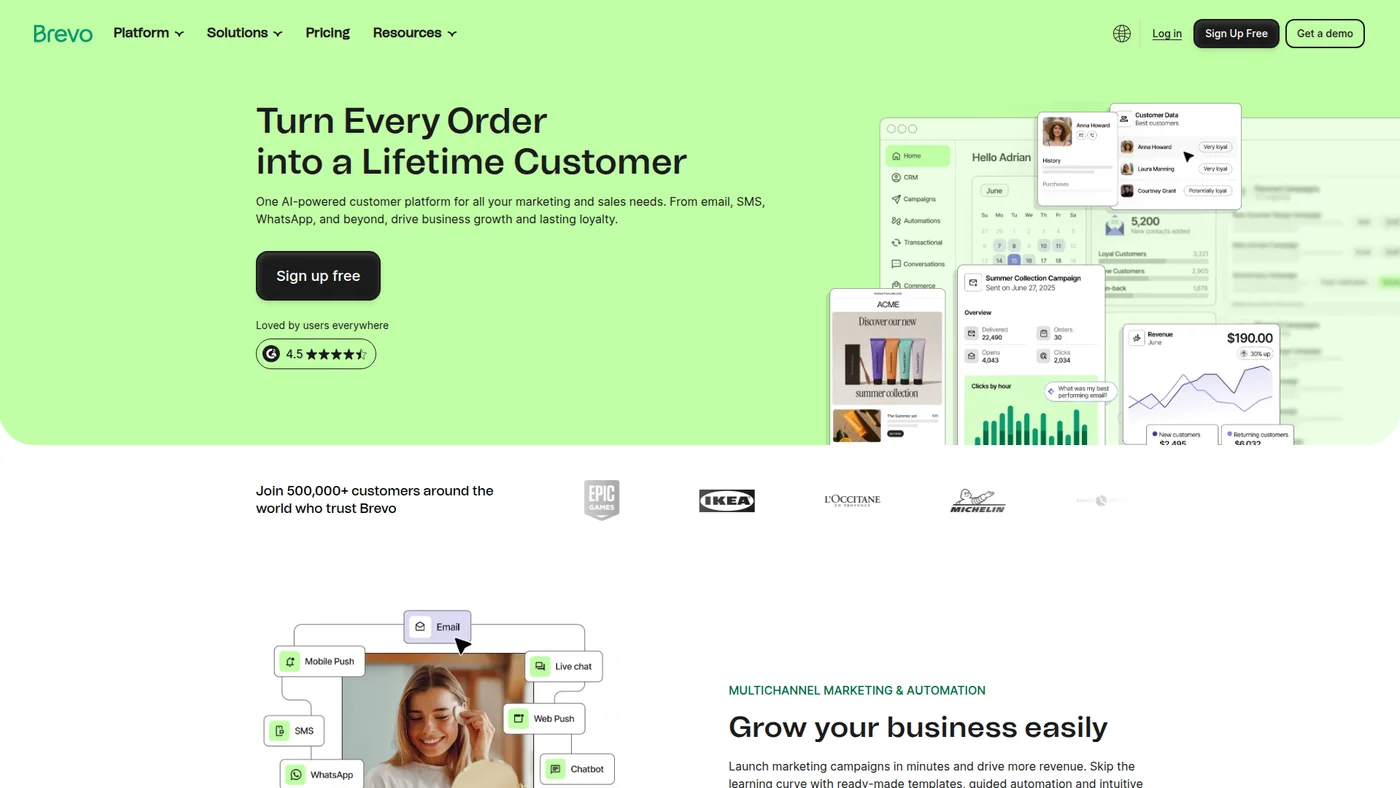
All-in-one marketing platform with email, SMS, chat, CRM, and marketing automation tools.

Why I like it: Sendinblue (now Brevo) offers email marketing, SMS, chat, and basic CRM features in their free plan. It's one of the most generous free tiers available, making it perfect for businesses just getting started with digital marketing.

Key Features

  • Email and SMS marketing
  • Live chat widget
  • CRM functionality
  • Marketing automation

Pros

  • Very generous free plan
  • Multiple communication channels
  • Good automation tools

Cons

  • Daily sending limits on free plan
  • Interface could be more intuitive
Sendinblue homepage screenshot
Review coming soonVisit Sendinblue
Best Deliverability
#15

AWeber

Best for: Businesses where email deliverability is critical to success

Email marketing platform with automation, landing pages, and web push notifications for small businesses.

Why I like it: AWeber has built a reputation for excellent email deliverability over 20+ years in business. If getting emails to the inbox is your primary concern, AWeber's track record and relationships with email providers are hard to beat.

Key Features

  • High deliverability rates
  • Autoresponder sequences
  • Landing page builder
  • Web push notifications

Pros

  • Excellent deliverability
  • Reliable and stable platform
  • Good customer support

Cons

  • Interface feels outdated
  • Limited advanced features
AWeber homepage screenshot
Review coming soonVisit AWeber
Best Affordable Option
#16

Moosend

Best for: Price-sensitive businesses that still want professional marketing automation features

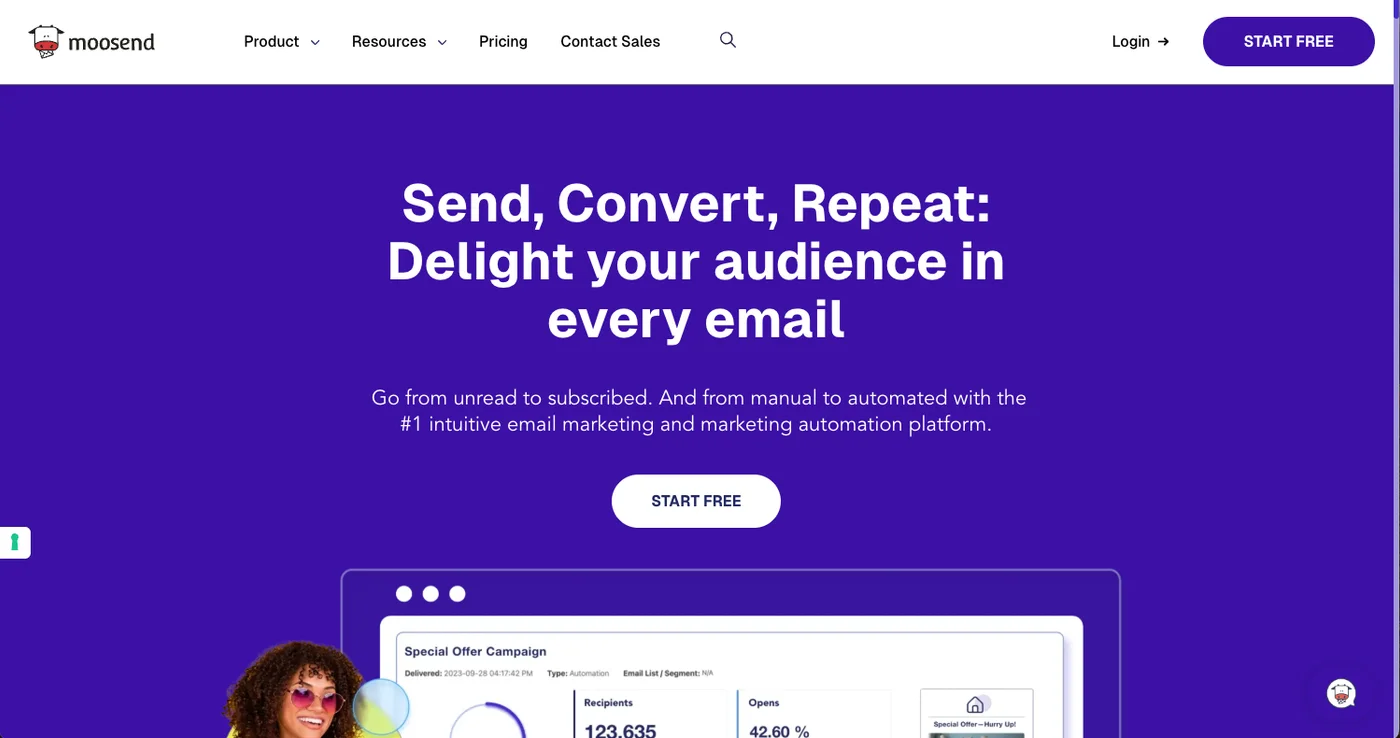
Email marketing and automation platform with advanced segmentation, A/B testing, and landing pages.

Why I like it: Moosend delivers advanced features like behavioral automation and A/B testing at a fraction of the cost of premium platforms. It's proof that you don't need to spend big to get professional marketing tools.

Key Features

  • Advanced segmentation
  • A/B testing
  • Landing page builder
  • E-commerce tracking

Pros

  • Very competitive pricing
  • Advanced features included
  • Good automation capabilities

Cons

  • Smaller user community
  • Fewer integrations available
Moosend screenshot
Review coming soonVisit Moosend
Best All-in-One
#17

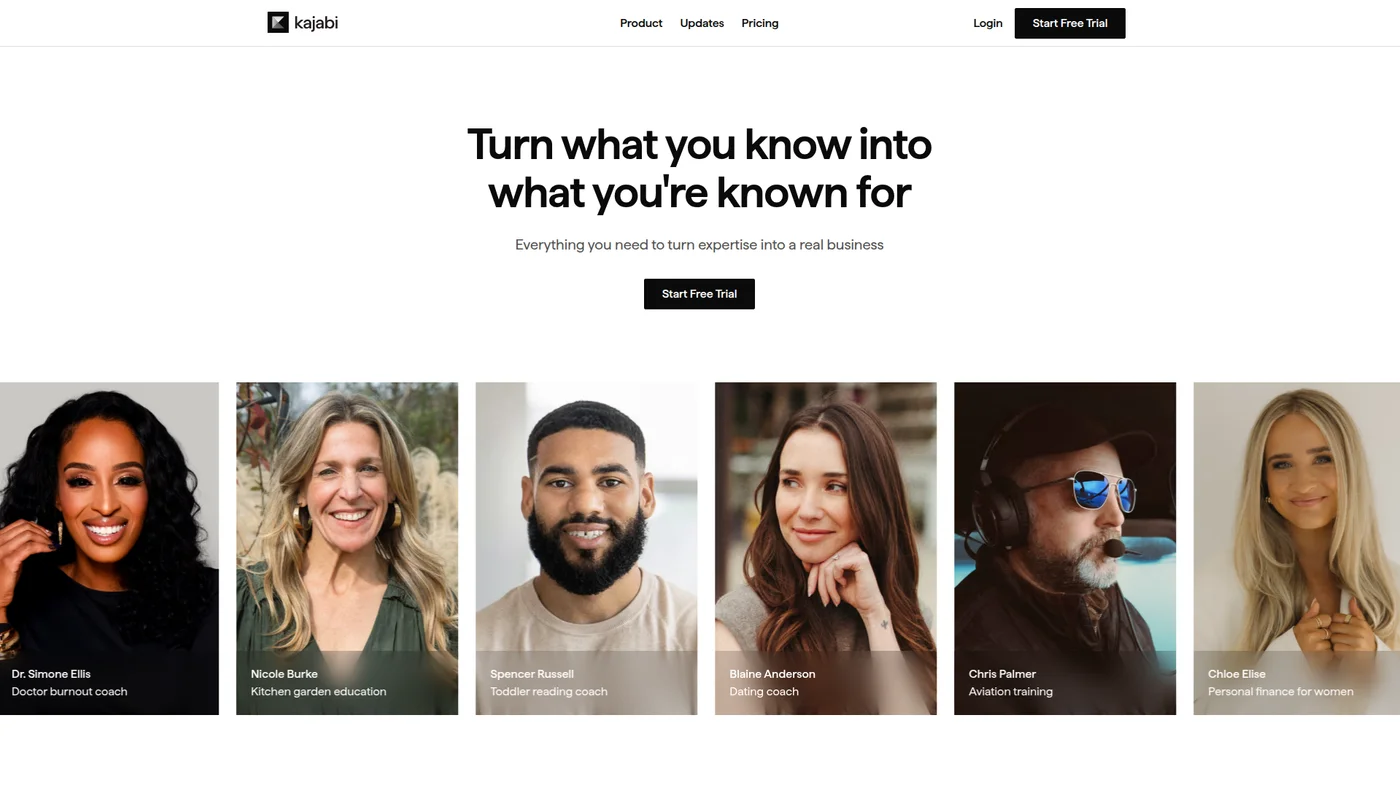
Kajabi

Best for: Knowledge entrepreneurs who want to create, market, and sell courses from one platform
★★★★4.3/5

All-in-one platform for course creators, coaches, and experts to build, market, and sell knowledge products

Why I like it: Kajabi handles everything from course creation to marketing to payment processing. If you're selling educational content or coaching services, Kajabi eliminates the need for multiple tools by doing it all reasonably well.

Key Features

  • Course creation tools
  • Website builder
  • Email marketing
  • Payment processing

Pros

  • True all-in-one solution
  • No transaction fees
  • Professional course delivery

Cons

  • Expensive for basic features
  • Limited customization options
Kajabi homepage screenshot
Best for Solo Creators
#18

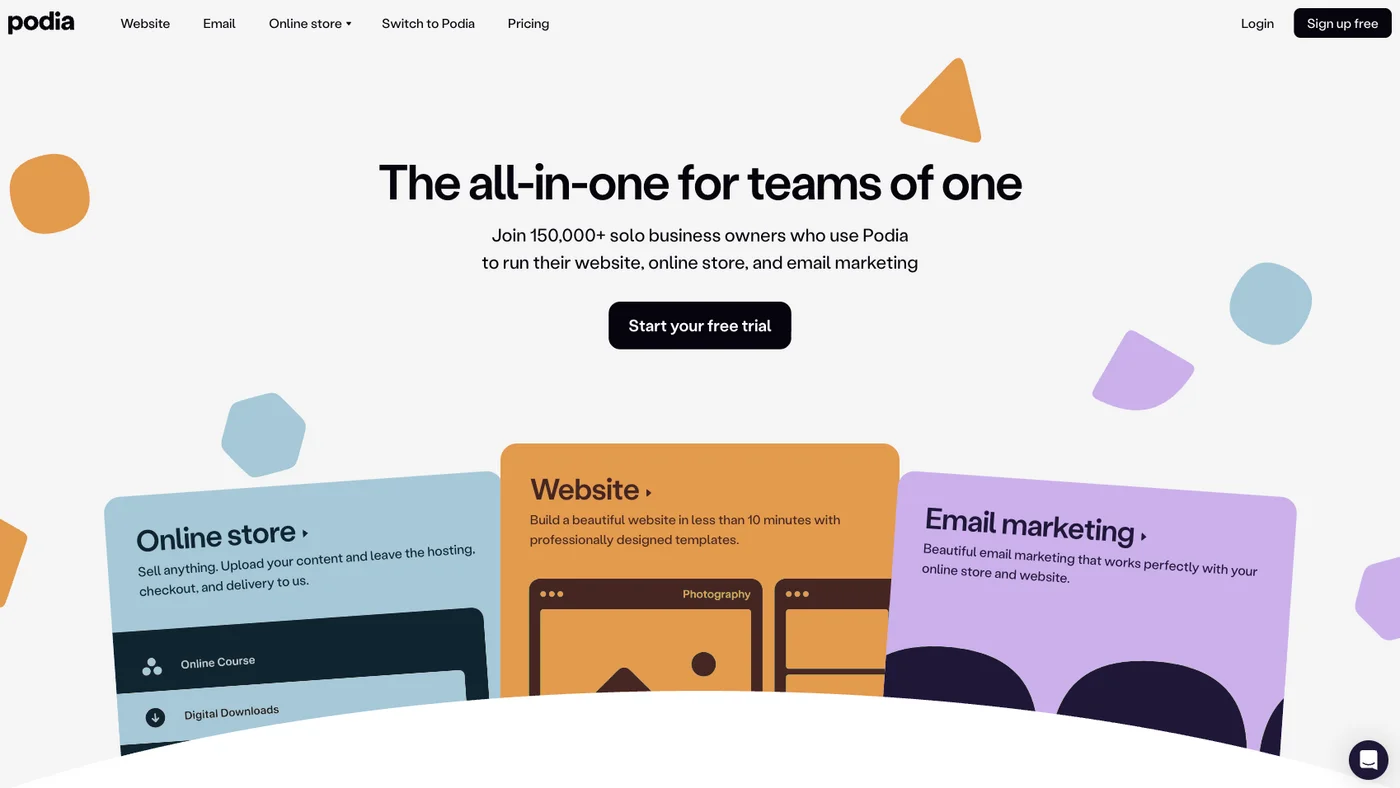
Podia

Best for: Solo entrepreneurs and creators who want simplicity over advanced features

All-in-one platform for solo business owners to build websites, sell digital products, and manage email marketing campaigns.

Why I like it: Podia focuses on simplicity and ease of use. If you're a solo creator who wants to sell digital products and communicate with your audience without getting bogged down in complex features, Podia keeps things refreshingly simple.

Key Features

  • Digital product sales
  • Simple website builder
  • Email marketing
  • Community features

Pros

  • Very easy to use
  • No transaction fees
  • Great for beginners

Cons

  • Limited advanced features
  • Fewer customization options
Podia screenshot
Review coming soonVisit Podia

How I Chose These

I evaluated these 22 platforms based on feature completeness, ease of use, pricing value, and customer support quality. I focused on tools that truly integrate multiple marketing functions rather than just bundling separate tools. Each platform was assessed for setup time, learning curve, automation capabilities, and how well different features work together.

Frequently Asked Questions

All-in-one platforms integrate multiple marketing functions into a single dashboard, eliminating the need to manage multiple subscriptions, logins, and data syncing between tools. While separate tools might offer more specialized features, all-in-one platforms provide better data consistency and workflow efficiency.

Free plans from platforms like Systeme.io, HubSpot, and Mailchimp can be excellent for getting started. They typically include basic email marketing, landing pages, and contact management. However, advanced features like automation and integrations usually require paid upgrades.

Start by identifying your primary use case: are you selling courses, running e-commerce, or doing B2B lead generation? Then consider your technical skill level, budget, and growth plans. Most platforms offer free trials, so test 2-3 options with your actual data before deciding.

Many all-in-one platforms include CRM functionality, but it varies by platform. HubSpot and ActiveCampaign offer robust CRM features, while others focus more on marketing automation. Evaluate whether the CRM features meet your sales team's needs or if you'll need a dedicated CRM.

Pricing varies widely based on features and contact limits. Basic plans start around $10-30/month, while comprehensive solutions range from $50-200/month for small businesses. Enterprise platforms can cost $1,000+ monthly. Factor in your contact list size, as most platforms charge based on subscribers.

Basic setup (importing contacts, creating your first email) can be done in a few hours. However, properly configuring automation workflows, integrations, and customizing templates typically takes 1-2 weeks. Plan for additional time to train your team on the new platform.

Most platforms offer import tools for contacts, email templates, and basic data. However, complex automation workflows usually need to be rebuilt. Some platforms provide migration services or have partnerships with migration specialists to help with the transition.

Integration capabilities vary significantly between platforms. Popular tools like HubSpot and ActiveCampaign offer hundreds of integrations, while newer platforms may have limited options. Check for integrations with your essential tools like accounting software, e-commerce platforms, and analytics tools before choosing.

Systeme.io

Complete marketing platform with sales funnels, email marketing, courses, and more at budget-friendly prices

Try Systeme.io →